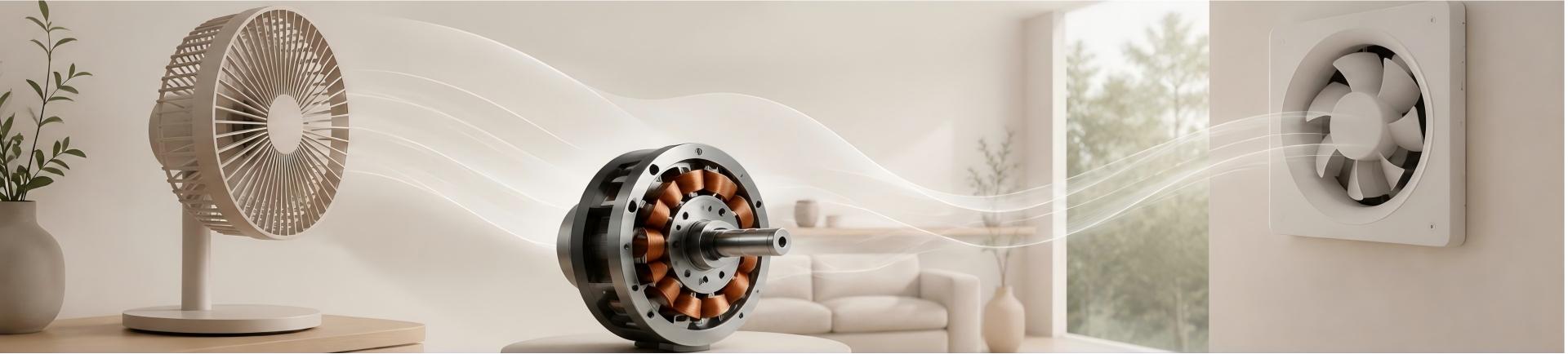
Exhaust fans may be used to remove bathroom humidity, kitchen odors, accumulated warm air, or stale air from enclosed spaces. Although these products share the same basic extraction purpose, their motor requirements can differ because of the blade design, airflow path, fan housing, duct resistance, mounting direction, and expected operating time.
The Exhaust Fan Motor should therefore be evaluated as part of the complete ventilation product. The final airflow and extraction result depend on the motor, blade or impeller, grille, duct, housing, installation opening, and room conditions working together.
The motor shaft connects to the blade or impeller inside the finished fan. When the motor begins rotating, the blade moves air through the fan housing.
In a wall-mounted exhaust fan, the air may pass directly through an exterior wall opening. In a ceiling-mounted ventilation fan, air may first enter the unit through a grille and then travel through a duct. In a kitchen fan, the airflow may need to carry odors, warm air, and cooking-related moisture away from the room.
The motor supplies the rotational force, but the direction and volume of the airflow are strongly affected by the complete fan structure.
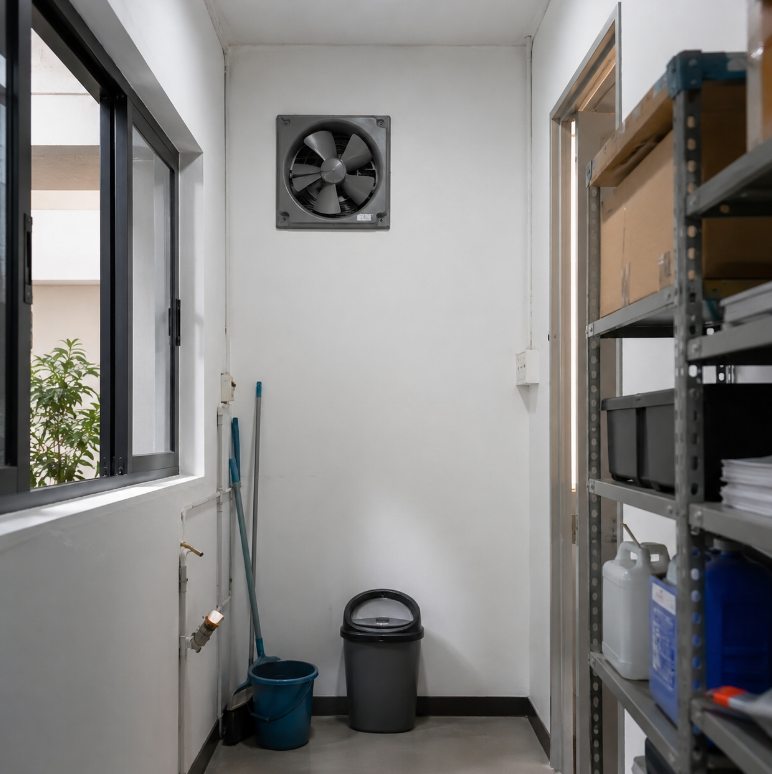
Axial exhaust fans move air in a direction that is generally parallel to the motor shaft.
This structure is commonly found in wall-mounted bathroom fans, window exhaust fans, and simple ventilation products.
The Exhaust Fan Motor must match the diameter, pitch, material, and weight of the axial blade. It also needs to fit the central mounting structure of the finished fan.
Axial fan applications often benefit from a relatively direct airflow path, but the final performance can still be affected by the grille, wall opening, and installation resistance.
Some exhaust fans use a centrifugal impeller or blower wheel rather than a conventional axial blade.
The impeller draws air into the fan and redirects it through an outlet or duct. This arrangement is commonly used where air needs to move through a longer or less direct ventilation path.
A BLDC Exhaust Fan Motor used with a centrifugal impeller should be evaluated according to the impeller diameter, weight, internal airflow resistance, and outlet design.
The motor cannot be selected only from the appearance of the finished fan because two similar housings may contain different impeller structures.
Ducted exhaust fans need to move air beyond the fan housing and through a connected ventilation route.
The length, diameter, bends, grille, and outlet of the duct can create resistance. This means a motor that performs adequately in an open-air test may not deliver the same result when installed in a complete duct system.
The motor and impeller should be reviewed according to the actual ventilation path of the finished product.
The Exhaust Fan Motor supports different ventilation tasks depending on where the finished fan is installed.
Bathrooms, shower rooms, laundry areas, and other humid spaces can retain water vapor after use.
The exhaust fan pulls humid indoor air toward the ventilation outlet. By maintaining air movement, the finished unit can help reduce the amount of moisture remaining in the room.
The motor itself does not dehumidify the air. It drives the fan blade or impeller that carries humid air away.
The final moisture-removal result depends on factors such as:
Room size
Fan position
Air inlet availability
Duct condition
Ventilation time
Complete fan airflow
Outdoor discharge arrangement
Exhaust fans are also used in kitchens, toilets, utility spaces, and enclosed rooms where odors may accumulate.
The motor maintains airflow through the ventilation unit so that odor-containing air can be moved toward the outlet.
Kitchen odor extraction may involve different conditions from bathroom ventilation because cooking areas may contain warmer air, grease particles, and more concentrated smells.
The finished fan structure and cleaning requirements should therefore be considered when evaluating the motor application.
Heat can build up in kitchens, equipment rooms, storage spaces, or poorly ventilated indoor areas.
An Exhaust Fan Motor drives the ventilation fan that removes some of this accumulated warm air.
The motor does not cool the air directly. Its role is to keep air moving out of the space so that fresher replacement air can enter from another opening.
Closed rooms can develop stagnant or uncomfortable indoor air when there is little natural ventilation.
Exhaust fans can support air exchange by removing indoor air and allowing replacement air to enter through doors, windows, vents, or dedicated air inlets.
The effectiveness of the system depends on both the exhaust outlet and the availability of incoming air.

Different installation methods place different structural demands on the motor and complete fan.
Wall-mounted exhaust fans are commonly installed in bathrooms, kitchens, utility rooms, small workshops, and other enclosed areas.
The motor is positioned inside the wall fan housing and drives an axial blade or another suitable air-moving component.
These fans may discharge air directly outside, which can simplify the ventilation route.
The motor application should still consider:
Wall opening size
Blade diameter
Housing depth
Mounting direction
Protective grille
Shutter or backdraft structure
Expected operating time
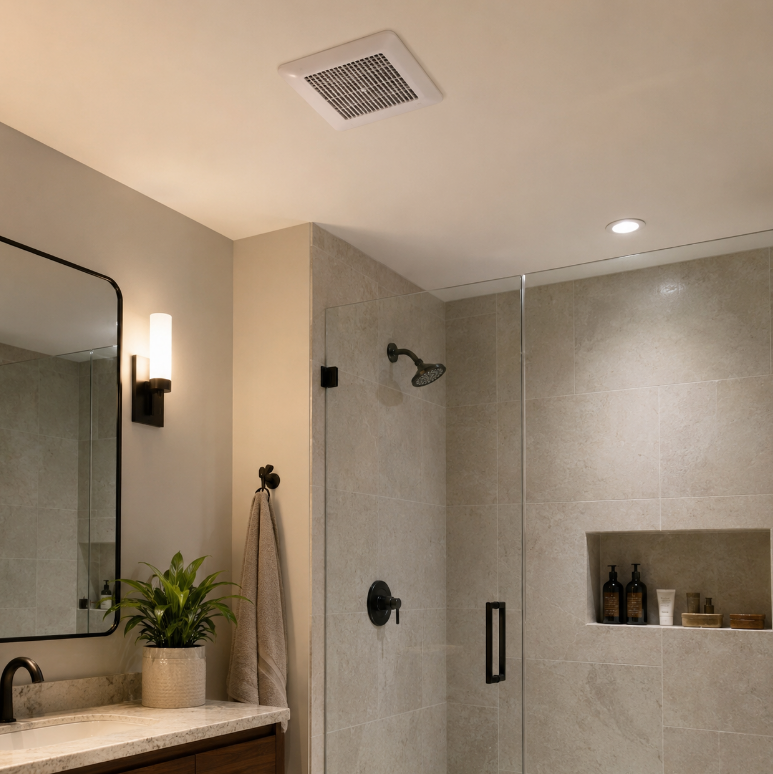
Ceiling exhaust fans draw air upward through a ceiling grille.
The air may then pass through an internal impeller and into a connected duct.
The Exhaust Fan Motor needs to fit within the limited ceiling housing and work with the inlet grille, impeller, outlet position, and duct connection.
Ceiling-mounted applications are common in residential bathrooms, hotel bathrooms, washrooms, and compact indoor spaces.
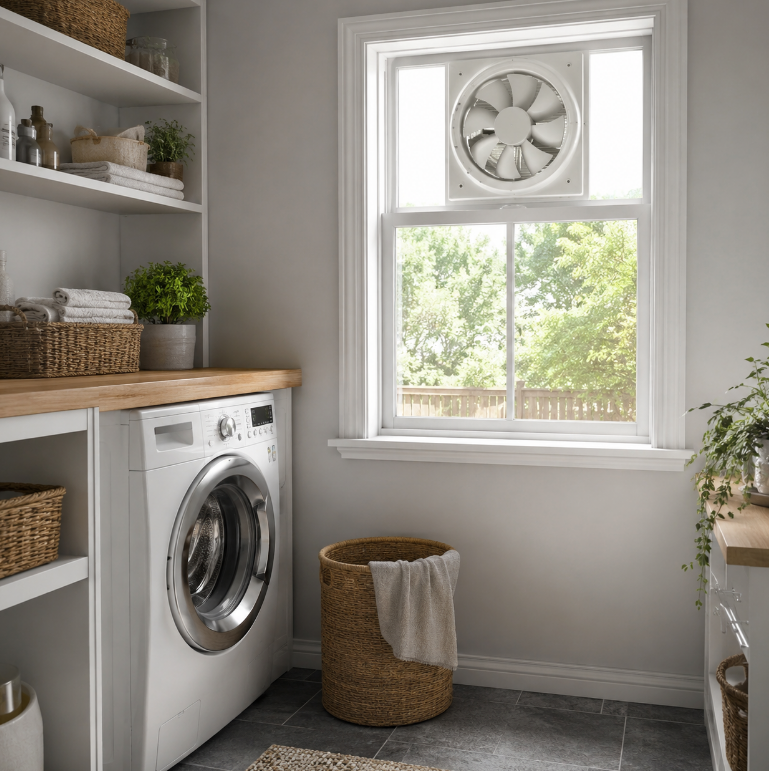
Window exhaust fans are installed in a window opening or panel.
Their main advantage is a short discharge path from the room to the outside.
The motor and blade need to fit the window-fan frame while maintaining sufficient clearance for safe rotation.
The complete product should also consider shutters, protective grilles, weather exposure, and installation stability.
An inline duct fan is installed within the ventilation duct rather than directly on the room wall or ceiling surface.
The motor drives an impeller inside the duct housing and supports airflow along the connected ventilation route.
This application may require a different motor structure from a standard wall exhaust fan because the mounting arrangement, airflow resistance, and housing shape are different.
Some Exhaust Fan Motors are used inside ventilation panels, cabinets, enclosed equipment housings, or light commercial air-extraction products.
The fan removes accumulated warm or stale air from the enclosure.
The motor should be evaluated according to the available panel space, blade or impeller structure, mounting points, and expected operating environment.
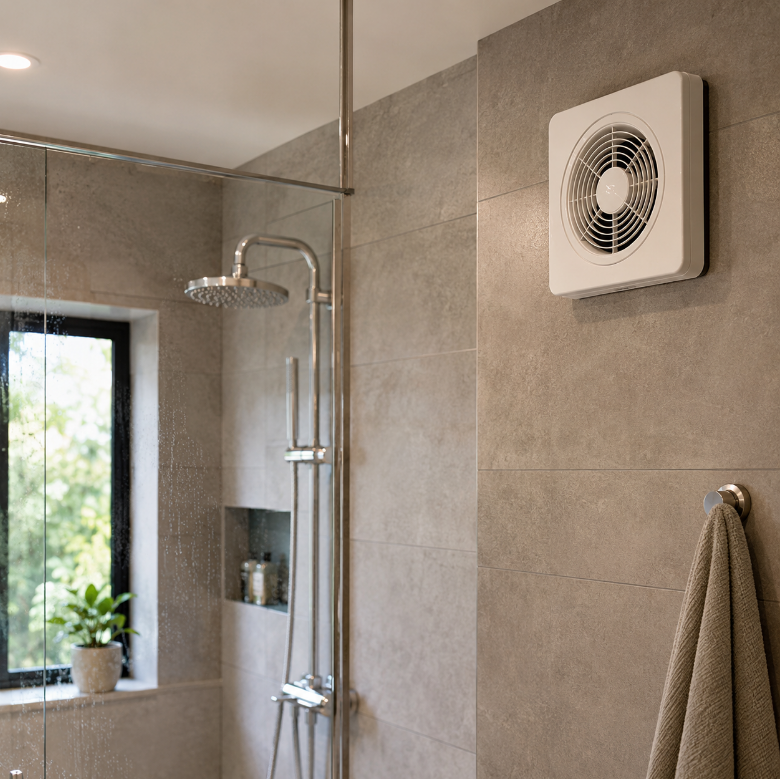
Bathrooms are one of the most common application areas for exhaust fan motors.
After bathing, humid air may remain around the shower enclosure, mirror, ceiling, and walls. A finished bathroom exhaust fan helps move this humid air out of the room.
The motor is commonly installed inside a wall-mounted or ceiling-mounted housing.
For this application, buyers should confirm:
Whether the fan is wall-mounted or ceiling-mounted
Whether the product uses an axial blade or impeller
Whether a duct is connected
Available housing space
Expected operating duration
Voltage and frequency
Target market
Moisture-related installation conditions
The motor should be protected by the complete product structure and installed according to the confirmed application.
Kitchen exhaust fans may be installed on walls, windows, ceilings, or inside ventilation systems.
Their purpose is to remove cooking odors, warm air, and moisture from the kitchen area.
A household kitchen exhaust fan may use a relatively direct airflow path. A larger kitchen ventilation product may need to move air through a grille, duct, or hood-related structure.
The Exhaust Fan Motor should match the blade or impeller and the expected airflow resistance of the complete unit.
The kitchen application should also consider that the finished fan may be exposed to:
Warm air
Cooking moisture
Odor-containing air
Grease particles
Longer operating periods
Regular cleaning
The motor itself should not be described as grease-proof or heat-resistant unless the specific product design and test conditions have been confirmed.
BLDC Motors can be used in finished ventilation fans for apartments, houses, bathrooms, kitchens, laundry rooms, and storage areas.
Residential products often need to fit limited installation spaces and match the visual design of the room.
The motor needs to support the intended airflow while remaining compatible with the compact housing, blade, grille, and mounting arrangement.
Some residential ventilation products may operate intermittently, while others may run for longer periods depending on the room and climate.
Hotels, serviced apartments, dormitories, and other multi-room projects may use the same ventilation fan design across many rooms.
These projects may require consistent motor structure, wiring, shaft dimensions, and installation characteristics across the production order.
The target market and project conditions should be confirmed before selecting the BLDC Exhaust Fan Motor.
Important information may include:
Number of rooms
Fan installation type
Voltage and frequency
Duct arrangement
Expected operating schedule
Housing dimensions
Maintenance requirements
Order quantity
Exhaust fans may also be used in small shops, offices, restaurants, storage rooms, service areas, and light commercial workspaces.
The required motor application can differ from a household fan because the room may be larger or the fan may operate for longer periods.
The buyer should avoid using a residential motor solution for a light commercial product without reviewing the actual blade load, operating time, and ventilation resistance.
The Exhaust Fan Motor forms only one part of the ventilation product.
Its application depends on several surrounding components.
The blade or impeller converts motor rotation into airflow.
Its diameter, shape, pitch, material, and weight influence the motor requirement.
The motor and air-moving component should be evaluated together.
The housing supports the motor and controls the path of the air.
It also determines the available motor space, mounting points, shaft position, and wiring direction.
A motor that does not match the housing may be difficult to install even when its electrical performance is suitable.
The grille protects the internal blade and forms part of the fan inlet or outlet.
Some wall fans also include a shutter that closes when the fan is not operating.
These parts can affect airflow resistance and should be considered when evaluating the complete fan.
A duct carries the extracted air away from the room.
Its size, length, bends, and outlet arrangement can influence the airflow requirement.
The buyer should provide duct-related information when the motor is intended for a ducted fan.
The motor must remain securely positioned while the blade or impeller rotates.
Mounting-hole locations, bracket design, shaft alignment, and housing strength can affect vibration and operating stability.

Before selecting a BLDC Motor for an exhaust fan, buyers should confirm the following information.
Clarify whether the motor is intended for a bathroom fan, kitchen fan, ceiling fan, wall fan, window fan, inline fan, or another ventilation product.
Provide the diameter, type, material, weight, and connection method of the blade or impeller.
Explain whether the fan discharges directly outdoors or moves air through a duct.
For ducted products, provide the available duct information when possible.
The target speed should match the blade or impeller and intended ventilation performance.
The required operating range should be confirmed from the original product or project design.
Motor power should be evaluated according to the blade load and complete airflow resistance.
A higher power value does not automatically produce a more suitable exhaust fan.
Confirm whether the motor operates horizontally, vertically, or in another orientation inside the finished fan.
Provide the available internal dimensions and mounting arrangement.
A motor sample or product drawing can help verify whether the structure can be installed correctly.
Explain the expected operating time, room environment, air temperature, and moisture conditions.
These details help define the intended motor application.
To evaluate an Exhaust Fan Motor application, please provide:
Finished exhaust fan type
Installation location
Wall, ceiling, window, or duct mounting method
Original motor sample or drawing
Blade or impeller details
Required speed
Required power
Shaft dimensions
Mounting-hole arrangement
Housing installation space
Airflow direction
Duct information, when applicable
Operating voltage and frequency
Expected operating time
Target market
Estimated purchasing quantity
Exhaust fan motors should not be selected only by motor diameter, housing color, or shaft appearance.
Two ventilation fans may appear similar but require different motor solutions because one uses an axial blade while the other uses a centrifugal impeller. One may discharge directly outdoors, while another needs to move air through a long duct.
The finished fan application should always be reviewed first.
Providing an original motor, fan drawing, or complete sample helps the motor manufacturer understand the installation structure and reduces the risk of mismatched components.
Send us your exhaust fan application, original motor sample or drawing, blade or impeller information, required speed and power, installation structure, duct details, voltage, frequency, target market, and expected order quantity.
Our team will review the application and discuss a suitable BLDC Motor solution for your finished ventilation fan product.
- Send Your Motor Sample
- Request an Exhaust Fan Motor Quote
Previous: Ceiling Fan
Next: Table Fan